



Medical note: This guide is for education, not diagnosis. Vaginal odour or discharge can have more than one cause. If you are pregnant, think you may have an STI, or have pelvic pain, fever, bleeding or worsening symptoms, seek medical advice promptly rather than trying a home remedy.
Key takeaways
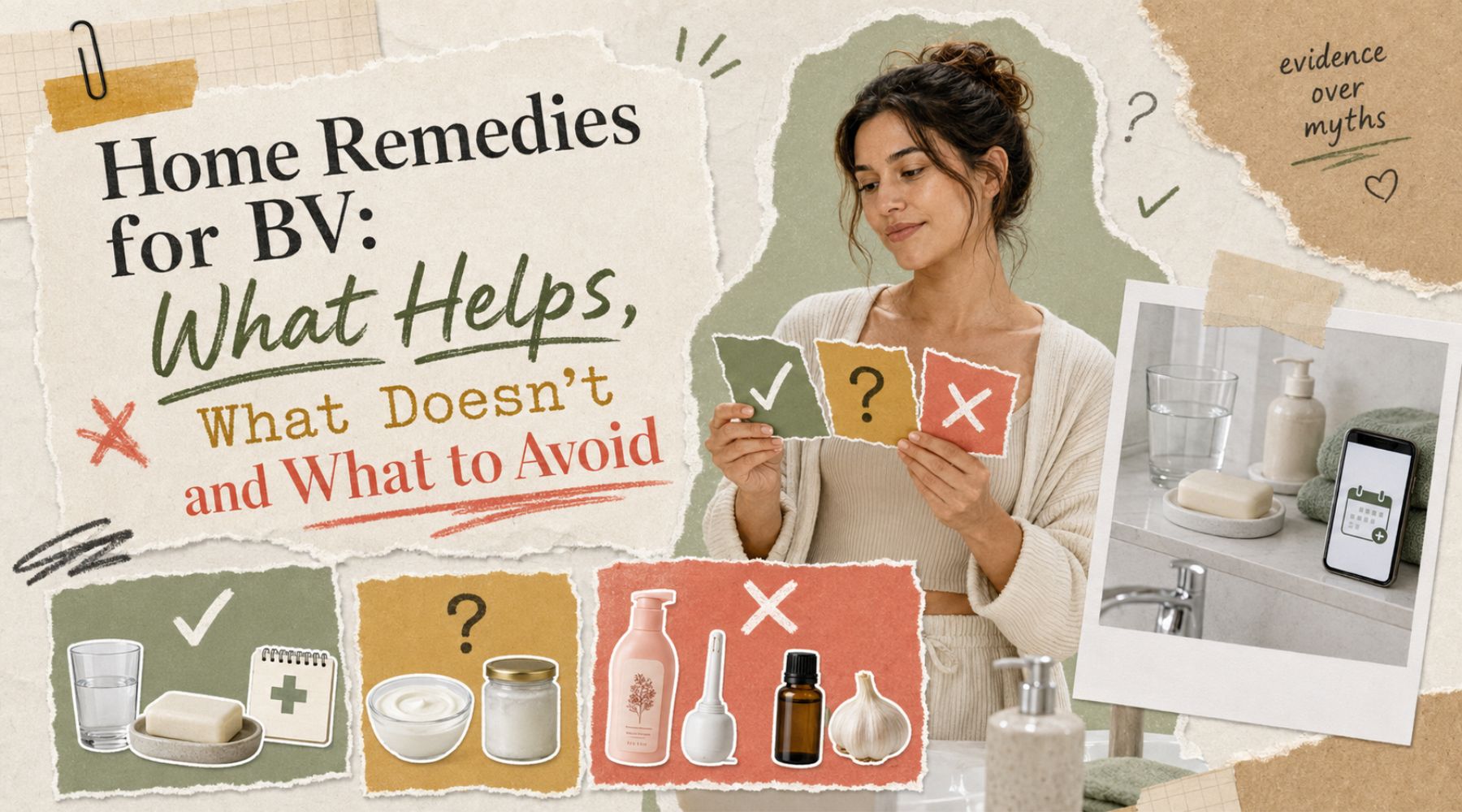
- Most home remedies do not cure bacterial vaginosis (BV). The safest at-home steps are gentle external care, avoiding irritants and arranging the right diagnosis and treatment.
- Do not put garlic, yoghurt, vinegar, baking soda, essential oils or hydrogen peroxide inside the vagina. These approaches are not recommended treatments and may irritate tissue or further disturb the vaginal environment.
- Lactic acid gel has some clinical evidence, but it is not equivalent to antibiotics. In a UK trial involving recurrent BV, short-term symptom resolution was lower with lactic acid gel than with oral metronidazole.
- Probiotics may have a role after standard treatment for some people with recurrent BV, but evidence varies by product and study. They should not be used as a replacement for diagnosis or prescribed treatment.
- Boric acid is not a kitchen-cupboard remedy. It appears in limited clinician-led regimens for multiple recurrences and has important safety restrictions.
Can home remedies get rid of BV?
There is no reliable DIY remedy that can be recommended to clear an active episode of bacterial vaginosis. The useful things you can do at home are mainly supportive: stop douching and using fragranced products, wash the vulva gently, avoid inserting food or household substances, and arrange an assessment if you think you have BV.
The NHS guidance on bacterial vaginosis symptoms and treatment explains that BV is usually treated with antibiotic tablets, gels or creams. It also recommends seeing a GP or sexual health clinic if you think you have BV, partly because discharge and odour can overlap with other conditions.
For a broader explanation of the condition, including why BV may return and how the vaginal microbiome is involved, read our complete bacterial vaginosis and recurrence guide.
That does not mean every non-antibiotic option is useless. A formulated vaginal lactic acid gel has been tested in a large UK trial, probiotics have been studied mainly in relation to recurrence, and boric acid appears in limited clinician-led regimens. The mistake is grouping all three with garlic, vinegar or yoghurt and calling them equally proven “natural cures”. They are not.
Why the right diagnosis matters before trying anything
BV is a change in the vaginal microbial community. Protective Lactobacillus bacteria become less dominant while a mixture of other bacteria increases. A typical symptom pattern includes thin greyish-white discharge and a noticeable fishy odour, which may be more apparent after sex. Some people have no symptoms, and BV does not usually cause intense soreness or itching.
If itching, burning or dryness is the main problem, do not automatically assume it is BV. Thrush, skin irritation, hormonal dryness and other causes can feel similar. Understanding the different causes of vaginal dryness and itching can help you recognise when your symptoms do not match the usual BV pattern.
Colour, consistency and associated symptoms are also important when assessing discharge. Our guide to vaginal discharge colours, odour and pH changes explains which patterns may be normal and which should be checked.
A home pH result or a familiar smell cannot rule out thrush, trichomoniasis, another STI, cervicitis or a retained tampon. The World Health Organization’s bacterial vaginosis fact sheet also explains that recent sex, menstruation, douching, intravaginal products and antimicrobial use can affect the vaginal environment and clinical assessment. Treating the wrong condition can delay the care you actually need.
The practical distinction: Comfort measures may make the area feel less irritated, but they do not prove BV has gone. If symptoms persist, return or are new to you, arrange an assessment.
Home remedies and non-antibiotic options for BV compared
| Option | What the evidence suggests | Bottom line |
|---|---|---|
| Gentle external washing and avoiding irritants | Recommended to reduce avoidable irritation and support comfort. | Reasonable supportive care, but not a cure for active BV. |
| Vaginal lactic acid gel | Tested in recurrent BV; it caused fewer of some side effects than oral metronidazole in one UK trial but produced lower short-term symptom resolution. | A formulated option, not a DIY acid rinse. Discuss suitability with a pharmacist or clinician. |
| Probiotic products | Evidence is mixed. Some reviews suggest that selected probiotics used after standard treatment may reduce recurrence, but products and regimens differ considerably. | A possible adjunct for recurrence support, not a proven replacement for active-BV treatment. |
| Boric acid vaginal capsules | Limited evidence exists for its use within multi-step regimens for multiple recurrences under clinical direction. | Not suitable for casual self-treatment. Never swallow it and do not use it during pregnancy or while trying to conceive unless a specialist explicitly directs otherwise. |
| Garlic, yoghurt, vinegar, baking soda, essential oils or coconut oil inserted vaginally | No good evidence supports these DIY insertions as BV treatment, while irritation and disruption are plausible harms. | Avoid. |
| Douching, antiseptics, hydrogen peroxide rinses or vaginal steaming | Clinical guidance warns against douching and intravaginal cleansing. Heat and chemicals may irritate delicate tissue. | Avoid. |
| Diet changes or “detoxes” | No specific diet has been shown to clear active BV. | Eat normally and do not delay appropriate treatment for an elimination diet. |
What may help safely
1. Gentle external care
The vagina is self-cleaning. The vulva is the external skin that can be washed gently. The NHS self-care advice for bacterial vaginosis recommends using water and plain soap around the genital area and avoiding perfumed soaps, bubble bath, vaginal washes, deodorants and douches.
A sensible at-home routine is simple:
- wash externally only, using lukewarm water and, if needed, a small amount of plain, unperfumed soap;
- pat the area dry rather than scrubbing it;
- change out of wet swimwear or sweaty clothing;
- stop using any new fragranced wash, deodorant, lubricant or bath product if irritation began after introducing it;
- do not try to wash odour away from inside the vagina.
These habits can reduce irritation and remove a possible trigger. They do not eradicate the bacterial community associated with active BV.
2. Formulated lactic acid gel: some evidence, but lower efficacy
Lactic acid gel is sometimes marketed as an antibiotic-free way to restore a more acidic vaginal environment. That idea is biologically plausible, but a properly formulated vaginal gel is very different from putting vinegar or another household acid into the vagina.
The UK VITA randomised controlled trial of lactic acid gel and metronidazole compared seven days of intravaginal lactic acid gel with oral metronidazole in 518 women with recurrent BV.
At two weeks, 70% of participants with available outcome data in the metronidazole group reported symptom resolution, compared with 47% in the lactic acid gel group. Lactic acid gel caused fewer of some side effects, but recurrence during the following months was common in both groups.
What that means: Lactic acid gel is not an imaginary or entirely unsupported option, but it was less effective for short-term symptom clearance than metronidazole in this trial. If you want to avoid an antibiotic or have difficulty tolerating one, ask a pharmacist, GP or sexual health clinician whether a regulated product is appropriate for you.
Do not copy a clinical-trial regimen without professional advice, especially during pregnancy, breastfeeding or while trying to conceive.
3. Probiotics: possible recurrence support, not an active-BV cure
Probiotic research is easy to oversell. The CDC bacterial vaginosis treatment guidelines state that the probiotic products evaluated were not supported as a replacement for, or an adjunct to, recommended treatment for active BV.
However, a later systematic review and meta-analysis of probiotics for BV recurrence examined 10 randomised trials and found that probiotics used after standard antibiotic treatment were associated with fewer recurrences. The researchers also highlighted the need for larger, more standardised and longer-term trials.
These findings address different questions. The most defensible conclusion is:
- do not use a probiotic instead of getting symptomatic BV diagnosed and treated;
- a probiotic may be worth discussing as an adjunct after treatment if BV keeps returning;
- benefits cannot be assumed from the word “probiotic” alone because strain, route, dose and study design vary;
- food yoghurt is not interchangeable with a studied probiotic formulation and should not be inserted vaginally.
For a deeper examination of strains, study limitations and product-selection questions, read our evidence-led guide to probiotics for BV and recurrent vaginal flora imbalance.
4. Boric acid: a clinician-led option for selected recurrent cases
Boric acid is often presented online as a cheap home remedy. That framing is unsafe. The CDC guidance for women with multiple BV recurrences mentions intravaginal boric acid only as one stage of a longer, multi-step regimen and describes the supporting evidence as limited.
A University Hospitals Birmingham NHS boric acid patient leaflet states that its prescribed vaginal capsules are unlicensed, for vaginal use only, must not be swallowed and should not be used during pregnancy or while trying to conceive. It also lists possible side effects such as burning, redness and pain.
Boric acid safety: Do not make your own capsules, use household borax or copy a regimen from social media. Keep any prescribed product away from children and follow the prescriber’s instructions exactly.
What does not work and what to avoid
Douching with water, vinegar, baking soda or antiseptics
Douching is not a treatment. It may temporarily mask odour while further disturbing the vaginal environment you are trying to protect.
The CDC advice on douching and BV recurrence states that douching may increase the risk of relapse and that no data support its use for BV treatment or symptom relief. The WHO guidance on bacterial vaginosis risk factors also includes vaginal cleansing, douching and the insertion of herbs or other products.
That includes apple cider vinegar, white vinegar, baking soda, disinfectant, antiseptic liquid and branded “feminine cleansing” solutions. A substance being acidic or antimicrobial in a laboratory does not make it safe or effective inside the vagina.
Raw garlic cloves
Garlic contains antimicrobial compounds, but that does not establish that inserting a raw garlic clove treats BV. There are no good clinical trials showing that this practice clears BV, and a clove may irritate delicate tissue or become difficult to remove.
Research involving an oral garlic preparation cannot be transferred to raw vaginal insertion. Keep garlic in food, not in the vagina.
Yoghurt-soaked tampons or yoghurt insertion
Yoghurt is not a standardised vaginal medicine. The organisms and concentrations in food yoghurt are not the same as those used in clinical probiotic research, and introducing a food product may cause irritation or contamination.
Eating yoghurt as part of your normal diet is a separate choice. Inserting it into the vagina is not an evidence-based BV treatment.
Tea tree oil, essential oils and coconut oil
“Natural” does not mean suitable for sensitive mucosal tissue. Essential oils may cause burning, allergic contact dermatitis or worsening irritation, particularly when they are used undiluted.
Coconut oil is also not a proven BV treatment and may affect certain latex barrier products. No mainstream BV guideline recommends inserting tea tree oil, essential oils or coconut oil to clear an active episode.
Hydrogen peroxide rinses
Hydrogen peroxide does not selectively remove only the bacteria associated with BV. It may also damage or irritate tissue and disrupt protective bacteria.
A Cleveland Clinic medical review of DIY vaginal remedies warns that hydrogen peroxide, vinegar, baking soda, garlic and essential oils may irritate the vaginal area or disrupt beneficial bacteria. Do not use hydrogen peroxide as a vaginal rinse or douche.
Vaginal steaming
Steam cannot rebalance the vaginal microbiome. It may burn delicate vulval skin, while scented herbs can introduce another source of irritation. There is no need to “cleanse” the vagina or uterus with steam.
Sugar-free, dairy-free or “anti-Candida” diets
BV is not thrush, and it is not caused by eating sugar or yeast. A varied and balanced diet supports general health, but no elimination diet has been shown to clear symptomatic BV.
Cranberry products are primarily researched in relation to urinary tract health, not as a treatment for bacterial vaginosis. Do not let a restrictive diet or supplement routine delay diagnosis.
Why this advice is cautious: Treatment-related claims can cause harm when they encourage someone to insert an irritant or delay appropriate care. Ellasie follows a defined medical and scientific review policy for women’s health content. Medical review supports accuracy, but it cannot replace individual assessment or treatment.
A practical next-step plan if you think you have BV
- Stop intravaginal products. Pause douches, scented washes, deodorants and DIY insertions. Do not try to cover the odour with fragrance.
- Note the complete symptom pattern. Record the discharge colour and texture, odour, itching, pain, bleeding, urinary symptoms, recent period, new products and whether symptoms followed sex or antibiotics.
- Arrange the right assessment. Contact a GP or sexual health clinic, particularly if this is your first episode, your symptoms are uncertain or there is a possibility of an STI.
- Use the recommended treatment exactly as directed. Do not stop early because the odour improves, share medication or add unapproved vaginal products during the course.
- Return if symptoms persist or recur. Repeated episodes may need confirmation of the diagnosis and a clinician-led recurrence plan rather than another round of DIY experiments.
If BV has been diagnosed before and the same symptoms return, ask a pharmacist or clinician which assessment or treatment route is appropriate in your area.
During treatment, follow the medicine’s instructions concerning sex and barrier contraception. The CDC recommendations for sex during BV treatment advise abstaining from sex or using condoms consistently during the treatment regimen. Some intravaginal medicines may weaken latex for the period stated in their product instructions.
When to seek medical help rather than self-treat
Contact a GP, midwife or sexual health clinic promptly if:
- you are pregnant and your vaginal discharge changes;
- this is your first episode or you are not sure it is BV;
- you have pelvic or lower abdominal pain, a fever, feel unwell or have bleeding that is not your period;
- you have sores, blisters, significant swelling or severe pain;
- urination is painful or there has been a possible STI exposure;
- symptoms continue after treatment or return repeatedly;
- you are immunocompromised or under specialist care and are considering using a vaginal product.
The NHS advice about BV during pregnancy recommends seeking treatment if you are pregnant and your vaginal discharge changes, because symptomatic BV carries a small risk of pregnancy complications.
Do not use boric acid or improvised vaginal remedies while waiting for professional advice.
Why the answer is not simply “natural” versus “medical”
BV research is complicated because diagnostic definitions, treatment regimens, recurrence windows and vaginal microbiome patterns differ between studies. A result from one product cannot automatically be applied to another product containing different ingredients, bacterial strains or doses.
Short-term symptom improvement is also not necessarily the same as microbiological resolution or long-term freedom from recurrence.
This is why the evidence categories matter:
- Established treatment: antibiotic regimens recommended in clinical guidance for symptomatic BV.
- Formulated non-antibiotic option with comparative trial evidence: lactic acid gel, which had lower short-term efficacy than metronidazole in the VITA trial.
- Promising adjunctive evidence: selected probiotic approaches used after standard treatment, with considerable differences between studies and limited long-term data.
- Limited clinician-led recurrent-BV evidence: boric acid used as part of a multi-stage regimen rather than as a standalone home remedy.
- Unsupported or avoidable DIY practices: douching, food insertion, essential oils, household acids, peroxide and steaming.
The honest answer is not that every non-antibiotic approach is useless. It is that the diagnosis, dose, formulation, route and clinical context matter. Household substitutes are not equivalent to products assessed in clinical research.
Bottom line
The best “home remedy” for suspected BV is to avoid making the vaginal environment more irritated while you arrange the right diagnosis. Gentle external care may support comfort, but it does not cure active BV.
Lactic acid gel may be an option for some people, although it was less effective than metronidazole in a UK trial. Probiotics are better framed as a possible post-treatment recurrence adjunct, not an active-BV cure. Boric acid belongs in a clinician-led plan rather than a DIY routine.
Skip garlic, yoghurt, vinegar, baking soda, essential oils, hydrogen peroxide, douching and steaming. If symptoms are new, persistent, recurrent or associated with pain, bleeding, pregnancy or possible STI exposure, seek professional help.
Frequently asked questions
Can BV clear without antibiotics?
Symptoms can fluctuate, but you cannot confirm from smell or discharge alone that the underlying problem has resolved. Do not rely on a home remedy or delay assessment if you have symptoms, are pregnant, may have an STI or are unsure of the diagnosis. This guide focuses on the evidence and safety of individual remedies rather than whether BV can go away without antibiotics in a specific person.
Can apple cider vinegar get rid of BV?
No good clinical evidence shows that apple cider vinegar clears BV. Vinegar can burn or irritate tissue, and using it as a douche may further disturb the vaginal microbiome. Do not put it inside the vagina.
Is boric acid safe for BV?
Boric acid is not a routine first-line BV treatment. Limited clinical guidance includes it only within a clinician-led regimen for multiple recurrences. It must never be swallowed, should be kept away from children and should not be used during pregnancy or while trying to conceive unless a suitably qualified clinician gives explicit instructions.
Do probiotics cure BV?
Probiotics should not be treated as a proven replacement for active-BV treatment. Some systematic-review evidence suggests selected probiotics may help reduce recurrence when used after standard treatment, but products and studies vary. Discuss recurrent symptoms and possible adjuncts with a clinician.
Is yoghurt a vaginal probiotic?
No. Food yoghurt is not a standardised vaginal medicine and is not equivalent to a clinically studied probiotic formulation. Eating yoghurt is different from inserting it into the vagina; vaginal insertion is not recommended.
What should I do if BV keeps returning?
Return to a GP or sexual health clinic for confirmation of the diagnosis and a recurrence plan. Recurrent symptoms may require another recommended antibiotic course or a longer suppressive approach selected by a clinician. Avoid repeatedly self-treating without confirming the cause.
References and further reading
- NHS: Bacterial vaginosis. Information about symptoms, diagnosis, treatment, recurrence, pregnancy and self-care.
- World Health Organization: Bacterial vaginosis fact sheet. Information about symptoms, diagnosis and risk factors including douching and intravaginal practices.
- CDC: Bacterial Vaginosis, STI Treatment Guidelines. Recommended treatment regimens and guidance concerning douching, recurrence, probiotics, boric acid and pregnancy.
- Armstrong-Buisseret L, et al. Lactic acid gel versus metronidazole for recurrent bacterial vaginosis: the VITA randomised controlled trial. NIHR Health Technology Assessment.
- Chieng WK, et al. Probiotics to reduce recurrence of bacterial vaginosis: a systematic review and meta-analysis of randomised trials. Frontiers in Nutrition. 2022;9:938838.
- University Hospitals Birmingham NHS Foundation Trust: Boric Acid 600mg Vaginal Capsules patient leaflet. Safety, administration and pregnancy restrictions for prescribed boric acid vaginal capsules.
- Cleveland Clinic: Medical review of DIY intravaginal remedies. Safety information covering vinegar, baking soda, hydrogen peroxide, garlic and oils.