


Vaginal Microbiome: pH, Flora and Probiotic Support
The vaginal microbiome is the community of bacteria and other microorganisms living in the vagina. In many reproductive-age women, Lactobacillus species are common and help produce lactic acid, which contributes to a low vaginal pH.
Microbiome composition varies between people and across menstruation, sexual activity, pregnancy, antibiotic use and menopause. Probiotic research is evolving, but results are strain- and product-specific, and supplements do not replace diagnosis or established treatment.

The vaginal microbiome at a glance
What is the vaginal microbiome?
The vaginal microbiome is a changing ecosystem of bacteria and other microorganisms. It differs from the gut microbiome: greater diversity is not automatically better in the vaginal environment.
Research in reproductive-age women has identified several common vaginal microbial community patterns. Many are dominated by species such as Lactobacillus crispatus, Lactobacillus gasseri, Lactobacillus iners or Lactobacillus jensenii, while some asymptomatic women have communities that are not Lactobacillus-dominant.1
Lactobacilli can produce lactic acid and influence the local environment. This helps explain why Lactobacillus-dominant communities are often associated with a lower vaginal pH. However, the presence or absence of one bacterial name is not enough to diagnose health or disease.
A microbiome can also change over time. Menstruation, sexual activity, medicines, pregnancy and hormone changes can alter composition temporarily or for longer periods. A single test result is therefore a snapshot rather than a complete explanation of someone’s symptoms.
Vaginal pH: what is typical and what can change it?
Vaginal pH is one useful clue, but it cannot identify the cause of symptoms on its own.
| Situation | What may happen | Why context matters |
|---|---|---|
| Reproductive years | A pH around 3.8–4.5 is commonly described in healthy reproductive-age women. | Not every healthy person has the same microbiome or pH, and a home measurement cannot confirm a diagnosis. |
| Menstruation or semen | Blood and semen can temporarily increase vaginal pH. | A temporary change after a period or sex is different from persistent symptoms requiring assessment. |
| Bacterial vaginosis | BV is often associated with pH above 4.5, but pH is only one diagnostic clue.4 | Clinical criteria or validated testing are needed because other causes can produce similar symptoms. |
| Perimenopause and menopause | Lower oestrogen can be associated with fewer lactobacilli and a higher pH.6 | Dryness, burning and urinary symptoms may relate to genitourinary syndrome of menopause rather than infection. |
What can change the vaginal microbiome?
Some changes are normal and temporary. Others are associated with symptoms or a diagnosed condition.
Hormones and life stage
Puberty, the menstrual cycle, pregnancy, postpartum changes, perimenopause and menopause can influence vaginal tissue, glycogen, Lactobacillus abundance and pH.
Antibiotics and medicines
Antibiotics can affect susceptible bacteria beyond the infection being treated. Never stop or alter prescribed medicine without professional advice.
Sex and menstruation
Sexual exposure, semen and menstrual blood can influence pH and microbial composition. These changes do not automatically mean infection.
Douching and irritants
Douching is not recommended. Scented sprays, deodorants and irritating products can worsen symptoms or disturb the local environment.3
Health conditions
Diabetes, immune changes, skin conditions and recurrent infections can alter the clinical picture. Symptoms need the correct diagnosis rather than a generic “imbalance” label.
Individual variation
Age, ethnicity, geography and personal biology are associated with microbiome differences. One commercial test cannot define a universal ideal for every woman.
What can changes in odour, discharge or comfort mean?
Normal discharge changes across the cycle. Persistent or unusual symptoms can have several causes, and appearance alone is not enough to distinguish them.
Strong or fishy odour
Can occur with BV, but odour alone is not diagnostic. A professional assessment is particularly important when it is new, persistent or accompanied by discharge.
Thick discharge and itching
Can occur with vulvovaginal candidiasis, but similar discomfort may also result from irritation or another condition.
Burning, pain or bleeding
Needs medical context. These symptoms should not be managed solely with supplements or home pH products.
Dryness after perimenopause
May be related to hormone-associated tissue changes. Read our Menopause Wellness Support guide and discuss persistent symptoms with a clinician.
Can probiotics support the vaginal microbiome?
Probiotics are being studied for vaginal and urogenital applications, but the answer is not “every Lactobacillus product works”.
| Question | Evidence summary | Responsible conclusion |
|---|---|---|
| Established Do strain and route matter? | Yes. Oral and vaginal products differ, and findings from one strain or formulation cannot automatically be transferred to another. | Check the exact organisms, serving and evidence rather than buying solely on the word “probiotic”. |
| Mixed Do oral probiotics alter vaginal flora? | Some studies report changes or colonisation, while a small 2022 study found no detectable effect on vaginal microbiome composition or functional potential.7 | Oral use does not guarantee that a product will reach or change the vaginal environment. |
| Not replacement therapy Can probiotics treat BV? | Current CDC guidance states that available studies do not support probiotic products as adjunctive or replacement therapy for BV.4 | Use established treatment prescribed or recommended by a qualified healthcare professional. |
| Not replacement therapy Can probiotics treat thrush? | Current CDC guidance says there is no substantial evidence supporting probiotics for treating vulvovaginal candidiasis.5 | Seek an appropriate diagnosis and antifungal treatment when indicated. |
How to evaluate a women’s probiotic
Look for clearly identified microorganisms, a defined daily serving, transparent viability information and claims that match the evidence. A high CFU number or a long species list is not proof that the product will change vaginal flora.
Our Probiotics 101 guide explains strains, CFU and supplement labels. For a narrower question, read what a vaginal probiotic is.
A sensible vaginal-health routine
Good daily care is usually simpler than social media makes it sound.
Clean the vulva gently
Use plain warm water or a mild unscented product externally when needed. The vagina itself does not need internal washing.
Avoid douching and deodorants
These products can irritate tissue and may disturb protective bacteria rather than solve the cause of symptoms.
Use medicine as directed
Complete prescribed treatment and return for assessment if symptoms persist or recur.
Choose supplements cautiously
Check strains, serving, quality controls and evidence. Do not treat a supplement as an alternative to diagnosis.
Consider hormonal context
Persistent dryness or irritation around menopause may require a different conversation from recurrent infection.
Track persistent patterns
Record timing, symptoms, treatment and recurrence to give a clinician more useful context.
When should you seek medical advice?
Contact a GP, pharmacist, sexual health clinic or another qualified healthcare professional for persistent or recurrent unusual discharge, strong odour, itching, burning, pain, urinary symptoms, sores, bleeding, fever or symptoms after a new sexual partner.
Seek advice promptly during pregnancy, after pelvic procedures, when symptoms are severe, or when over-the-counter treatment has not worked. Repeatedly self-treating without confirming the cause can delay the correct diagnosis.
Explore relevant Ellasie formats
These are commercial product links for shoppers comparing formats. They do not change the evidence limitations above and are not treatments for BV, thrush or another diagnosed condition.

Vaginale Probiotica Capsules voor Vrouwen – pH-balans
A capsule-and-prebiotic option for women who prefer a targeted daily format.

Feminine Balance Gummies voor Vrouwen – pH-balans & Ananas
A pineapple-flavoured gummy option for women who prefer a chewable daily routine.
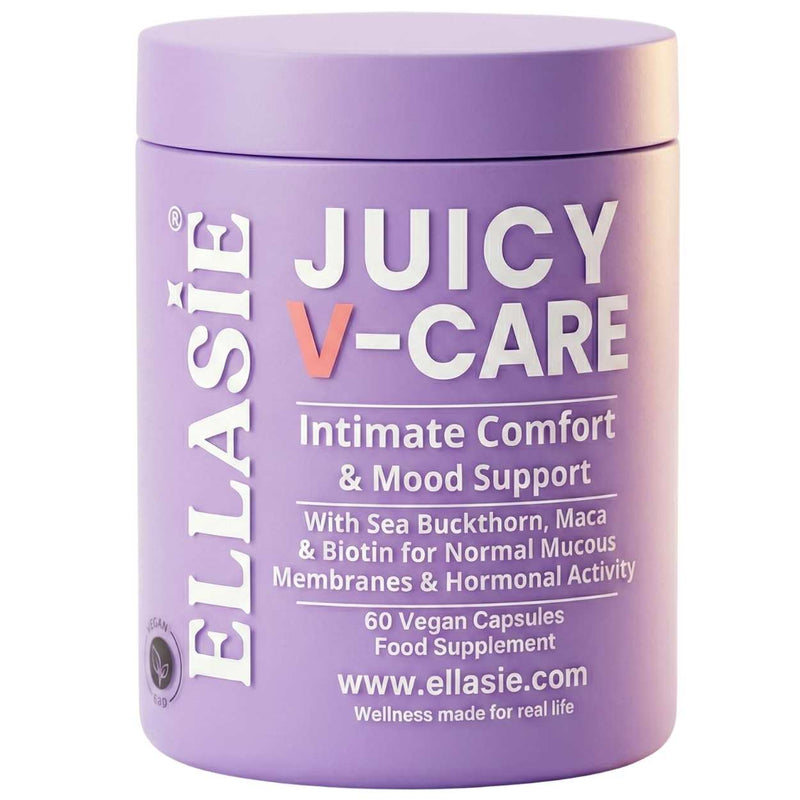
Juicy V-Care: ondersteuning voor vaginale hydratatie en een goed humeur
A separate moisture-support option for women comparing intimate-wellness routines.
References and further reading
Sources were selected for vaginal-microbiome biology, clinical boundaries, vulvovaginal care, menopause and probiotic evidence.
- Ravel J, Gajer P, Abdo Z, et al. Vaginal microbiome of reproductive-age women. Proceedings of the National Academy of Sciences. 2011.
- Dubé-Zinatelli E, et al. Vaginal microbiome: environmental, biological and population influences across the life course. 2024.
- American College of Obstetricians and Gynecologists. Vulvovaginal health and Vaginitis.
- US Centers for Disease Control and Prevention. Bacterial vaginosis treatment guidelines.
- US Centers for Disease Control and Prevention. Vulvovaginal candidiasis treatment guidelines.
- Micks E, Reed S, Mitchell C. The postmenopausal vaginal microbiome and genitourinary syndrome of menopause. 2024.
- Hertz FB, Holm JB, Pallejá A, et al. Vaginal microbiome following orally administered probiotic. APMIS. 2022.
- Romeo M, D’Urso F, Ciccarese G, et al. Exploring oral and vaginal probiotic solutions for women’s health from puberty to menopause. Microorganisms. 2024.
- NHS. Bacterial vaginosis.
Frequently asked questions
What is the vaginal microbiome in simple terms?
What is a normal vaginal pH?
Does a higher vaginal pH always mean BV?
Can probiotics change the vaginal microbiome?
Can probiotics treat bacterial vaginosis?
Can probiotics treat thrush?
Does menopause affect vaginal flora?
Is vaginal discharge always a sign of infection?
Should intimate washes or douches be used to balance pH?
Should probiotics be taken after antibiotics?
When should I see a healthcare professional?
Has this page been medically reviewed?
Questions about Ellasie products?
For help comparing Ellasie formats or understanding a label, use the Ellasie contact page.
For symptoms, diagnosis, medication questions, pregnancy, breastfeeding or individual suitability, contact a qualified healthcare professional.
