



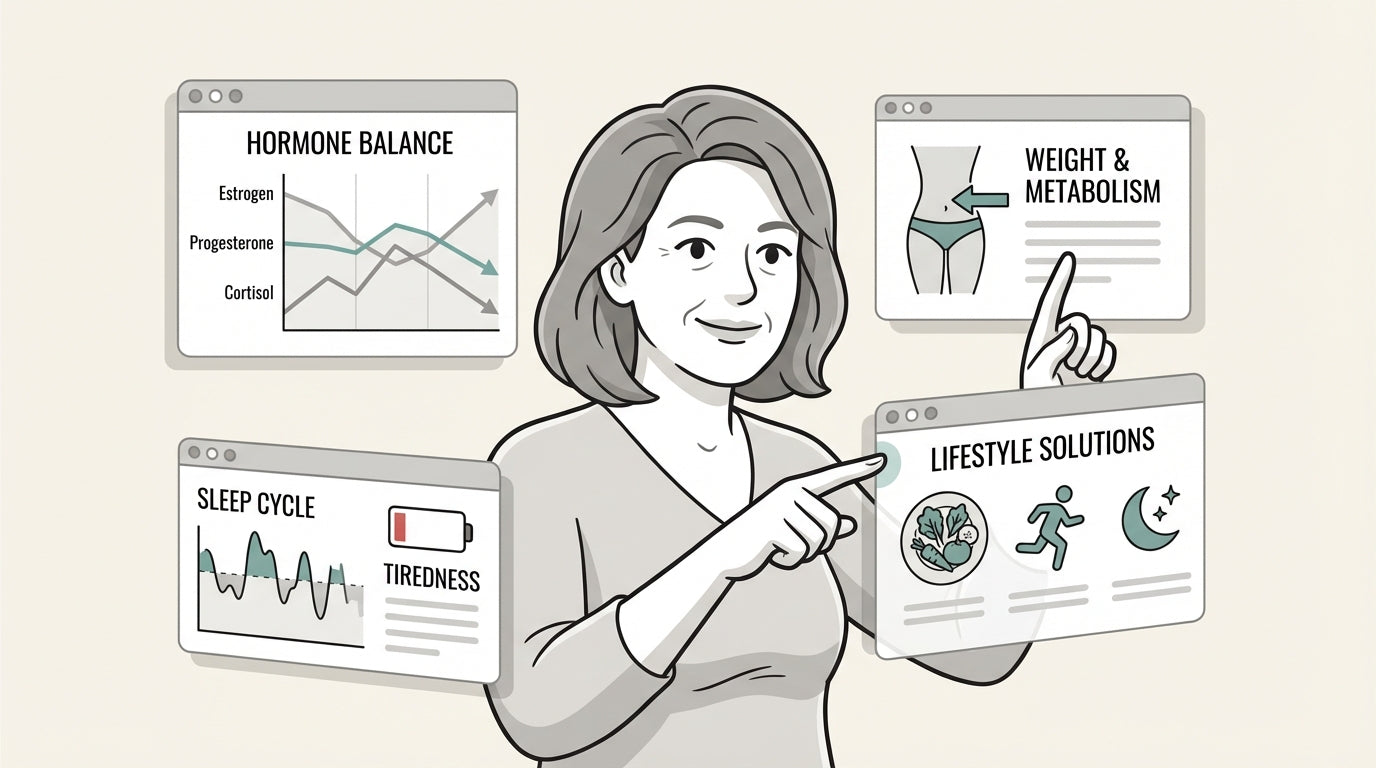
Medical note: This article is for general education and cannot diagnose the cause of fatigue or weight change. Persistent tiredness deserves proper assessment because menopause symptoms can overlap with sleep apnoea, iron deficiency anaemia, thyroid problems, diabetes, depression, medication effects and other conditions. Speak to a GP or another qualified healthcare professional if you are concerned.
Key takeaways
- Menopause fatigue is real, but it is not a diagnosis. Hormonal change may contribute, often through sleep disruption, but it should not automatically be blamed for every episode of persistent exhaustion.
- Weight gain is not inevitable or caused by one hormone alone. Ageing, changing fat distribution, reduced muscle mass, sleep, mood, activity, diet, medicines and health conditions can all play a part.
- Start with the problem that is draining the most energy. Improving night sweats, sleep, meal regularity or an untreated health issue can make movement and weight-management habits more achievable.
- Avoid the all-or-nothing trap. A repeatable routine is usually more useful than crash dieting or starting an exercise plan that cannot be sustained while tired.
- Clinical treatments are options, not failures. If menopause symptoms are affecting daily life, a GP, nurse or pharmacist can discuss HRT and non-hormonal treatments with you.
Menopause fatigue and weight changes often appear together, but they do not have one universal cause. Hot flushes and night sweats can interrupt sleep, mood symptoms can reduce motivation, and ageing can affect muscle mass and energy needs. At the same time, persistent fatigue may have a separate medical cause. The most useful approach is to rule out warning signs, identify the biggest barrier, and build a routine that restores capacity before making weight loss the only goal.
This matters because treating tiredness as a willpower problem can create a punishing cycle: poor sleep, less energy, irregular meals, reduced movement and then more frustration about weight. You do not need a perfect routine. You need a safe starting point that still works on a difficult day.
What does “menopause fatigue” actually mean?
“Menopause fatigue” is an everyday description rather than a medical diagnosis. It can mean physical heaviness, sleepiness, low stamina, difficulty concentrating, reduced motivation or waking unrefreshed despite spending enough time in bed. Some people notice it during perimenopause, when hormone levels fluctuate and periods change; others experience it after menopause.
The NHS overview of menopause and perimenopause symptoms lists sleep problems, night sweats, mood changes, brain fog and weight gain among the experiences that can occur. These symptoms can interact. For example, repeated waking may worsen concentration and mood the following day, while low mood or anxiety can make restorative sleep harder to achieve.
However, timing alone does not prove that menopause is the cause. The NHS guidance on persistent tiredness and fatigue also points to sleep loss, stress, depression, medicines and medical conditions. If fatigue is ongoing, unexplained or worsening, do not assume that you simply have to tolerate it.
A useful distinction: feeling sleepy suggests you may be able to fall asleep, while fatigue can feel like depleted physical or mental energy even when you are not sleepy. You can experience either or both, and describing the difference may help a clinician decide what to investigate.
Why fatigue and weight changes can overlap
There is rarely one switch that explains both symptoms. Think of them as several overlapping influences rather than a single “menopause metabolism” problem. For a broader overview of stages, symptoms and care options, use Ellasie’s menopause symptoms and treatment guide.
1. Night sweats and broken sleep
Hot flushes can happen at night and repeatedly disturb sleep. Even brief awakenings may leave you feeling unrefreshed, especially when they happen over many nights. Tiredness can then reduce spontaneous movement, make planned exercise feel harder and increase reliance on convenient food or caffeine.
Not every sleep problem is caused by hot flushes. Loud snoring, witnessed pauses in breathing, gasping or choking, morning headaches and severe daytime tiredness can indicate sleep apnoea. The NHS sleep apnoea guide advises seeing a GP when these symptoms are present.
2. Hormonal change, ageing and fat distribution
Hormonal change can affect where fat is stored, with more weight commonly noticed around the abdomen and upper body. But overall weight change is more complex. Ageing, genetics, activity, muscle mass, sleep, eating patterns, alcohol, medicines and health conditions may all contribute.
The British Menopause Society’s clinician resource on nutrition and weight gain discusses the combination of changing body composition, abdominal fat distribution and reduced lean muscle. The practical lesson is not that weight gain is unavoidable; it is that a one-cause explanation is too simplistic.
3. Muscle loss and reduced activity
Muscle supports strength, mobility and metabolic health. Adults tend to lose muscle with age unless it is challenged and maintained. Fatigue, joint discomfort, injury, caring responsibilities or lack of time can also reduce activity, which may gradually change fitness and body composition.
This is why resistance exercise matters, but “train harder” is poor advice for someone who is already depleted. The aim is progressive, recoverable activity. The NHS adult activity guidance recommends strengthening the major muscle groups on at least two days each week, alongside aerobic activity. That is a destination, not a requirement to achieve everything in week one.
4. Mood, stress and mental load
Perimenopause and menopause often coincide with demanding years: work pressure, caring for family, relationship changes or disrupted routines. Stress does not automatically “cause belly fat”, and reducing the whole issue to cortisol is misleading. Stress can still matter indirectly by affecting sleep, appetite, alcohol intake, food choices and willingness to move.
Low mood, anxiety and loss of interest can also present as low energy. If your mood has changed or daily tasks feel unusually difficult, include that when speaking to a healthcare professional rather than treating it as a discipline problem.
5. Eating less can sometimes make the routine harder
Weight loss, when appropriate, requires a sustainable reduction in energy intake over time. An aggressive restriction plan can be difficult to maintain and may leave some people feeling hungrier, more preoccupied with food or less able to train and recover. Cutting out entire food groups also makes it harder to cover nutritional needs.
A more workable starting point is regular meals built around a protein source, vegetables or fruit, fibre-rich carbohydrates and an appropriate amount of fat. The exact pattern can be adapted to culture, budget, appetite, allergies and medical needs. No single food burns menopause fat.
What to do first: use the right order
When energy is low, trying to overhaul food, sleep and exercise at once usually creates more friction. Use this order instead.
Step 1: check for a reason not to self-manage
Arrange a GP appointment if fatigue is persistent, worsening, affecting normal activities or accompanied by other concerning symptoms. A clinician may ask about sleep, bleeding, mood, medicines, alcohol, diet and symptoms that could suggest anaemia, thyroid disease, diabetes or another condition. Tests are not identical for everyone, so avoid ordering a random supplement panel and diagnosing yourself from the results.
Step 2: identify the biggest energy leak
For seven days, make a short note of bedtime, waking, night sweats, caffeine and alcohol timing, meals, movement, mood and energy. This is not a demand for perfect tracking. Its purpose is to reveal patterns:
- Are night sweats waking you repeatedly?
- Do you feel much worse after several nights of short sleep?
- Are long gaps between meals followed by intense hunger?
- Does afternoon caffeine push bedtime later?
- Are heavy periods occurring alongside fatigue or breathlessness?
- Are snoring or breathing pauses being reported?
Choose the pattern with the clearest impact. That becomes the first target.
Step 3: stabilise sleep before demanding more output
The NHS recommends regular sleep routines and practical measures for hot flushes, including keeping the bedroom cool and reducing personal triggers such as caffeine, alcohol or spicy food when relevant. Its menopause self-care guidance also notes that cognitive behavioural therapy can help with sleep problems, low mood, anxiety and hot flushes.
Pick two actions, not ten. A consistent wake time plus a cooler bedroom is a reasonable start. If alcohol or late caffeine clearly affects you, test a change for two weeks and compare how you feel.
Step 4: make meals predictable
A “steady energy” meal does not require special products. Use a simple template:
- Protein: eggs, yoghurt, fish, poultry, tofu, beans, lentils or another suitable option.
- Plants: vegetables, fruit, beans, nuts or seeds.
- Fibre-rich carbohydrate: oats, potatoes with skin, wholegrain bread, brown rice or pulses.
- Fat: olive oil, nuts, seeds, avocado or oily fish in a portion that suits your needs.
If you routinely skip lunch and then graze all evening, fixing lunch may be more useful than banning carbohydrates. If you have diabetes, digestive disease, kidney disease, a history of disordered eating or another condition affected by diet, seek individual advice from an appropriate clinician or registered dietitian.
Step 5: rebuild movement from the minimum repeatable dose
On low-energy days, start with five to ten minutes of walking, gentle cycling, mobility work or a short resistance session. Progress when recovery is acceptable. Two brief strength sessions can be built from movements such as sitting to standing from a chair, wall press-ups, supported rows with a band and carrying manageable loads.
Sharp pain, chest pain, faintness, unusual breathlessness or a significant worsening of symptoms is not a cue to push through. Stop and seek medical advice appropriate to the symptom.
Step 6: judge progress with more than the scale
Day-to-day weight changes reflect fluid, food in the digestive tract and other factors, not just body fat. If weighing is helpful and safe for you, look at the trend over several weeks. Also track signs that the routine is becoming more sustainable: fewer afternoon crashes, better sleep continuity, improved strength, easier walking and clothes fitting differently.
If weight monitoring increases anxiety or brings back disordered eating behaviours, stop and seek qualified support. Health improvement does not require daily weighing.
A realistic two-week energy-and-routine reset
This plan is intentionally modest. It is not a treatment or a rapid weight-loss programme. Use it to collect useful information and make the next decision easier.
| Area | Minimum action | What to notice |
|---|---|---|
| Sleep | Keep one consistent wake time and make the bedroom cooler if night sweats are a problem. | Number of awakenings, morning freshness and daytime sleepiness. |
| Meals | Build two dependable meals each day with protein and a fibre-rich plant food. | Hunger between meals, afternoon crashes and evening grazing. |
| Movement | Take a 10-minute walk on most days at a comfortable pace. | Mood, stiffness, breathlessness and recovery later that day. |
| Strength | Complete two short, manageable sessions each week. | Technique, confidence and whether soreness resolves normally. |
| Symptoms | Record energy, night sweats, mood, bleeding changes and relevant medicines once daily. | Patterns worth discussing with a GP or menopause professional. |
At the end of two weeks, keep the actions that helped and change only one thing that did not. If nothing improves, or the record raises concerns, take it to a healthcare appointment. The value of the plan is information and consistency, not perfection.
Where HRT and other treatments fit
If fatigue is being driven by night sweats, hot flushes or menopause-related sleep problems, treating those symptoms may improve your capacity to function. The NHS HRT overview explains that HRT can help symptoms including hot flushes, night sweats, sleep problems, mood changes and vaginal dryness.
HRT is not a stand-alone weight-loss treatment. Its suitability depends on your symptoms, medical history and risk factors. The NHS advises discussing the individual benefits and risks of HRT with a GP. Do not start, stop or change prescribed treatment based on an article.
Non-hormonal options also exist. Depending on the symptom and your circumstances, a clinician may discuss CBT or medicines. The current NHS menopause treatment guide gives an overview of hormonal and non-hormonal choices. If a treatment improves sleep or mood, healthier routines may become easier, but results differ between people.
What about vitamins and supplements?
Supplements should not be used to guess the cause of fatigue. A nutrient may help when an inadequate intake or deficiency is present, but that does not mean more is better or that the same product is suitable for everyone. Herbal menopause products may have limited evidence, side effects or medicine interactions. Speak to a pharmacist, GP or relevant clinician if you take medicines, have a health condition, are pregnant or breastfeeding, or are due to have surgery.
Format is not proof of effectiveness. If you are deciding between tablets, capsules and gummies, Ellasie’s guide to gummy vitamins compared with pills explains practical differences such as dose capacity, added sugar, convenience and label checking. The ingredient, dose, evidence, safety and your reason for taking it matter more than whether it tastes pleasant.
When to see a GP or seek urgent help
Book a GP appointment if fatigue has lasted for several weeks, is not improving, is affecting daily life or has no clear explanation. Seek advice sooner if you have:
- heavy periods, bleeding that is becoming heavier, or any bleeding after menopause;
- palpitations, unusual breathlessness, pale skin or marked weakness;
- loud snoring, gasping, choking or witnessed pauses in breathing during sleep;
- unexplained weight loss, increased thirst or urinating much more than usual;
- persistent low mood, anxiety, loss of interest or difficulty coping;
- new symptoms after starting or changing a medicine; or
- fatigue that is rapidly worsening or prevents normal activities.
Ellasie’s medical review policy explains how symptom-led health content is reviewed and why an article cannot replace individual clinical assessment.
Get urgent help: Call 999 or go to A&E for chest pain, severe difficulty breathing, fainting with ongoing symptoms, signs of a stroke, serious self-harm or an immediate risk to life. If you have thoughts of suicide or feel unable to keep yourself safe, the NHS lists immediate crisis-support options, including NHS 111 and 999 when there is immediate danger.
The bottom line
Menopause can coincide with major changes in sleep, mood, body composition and weight, but persistent fatigue should never be dismissed as “just hormones”. Start by checking for warning signs and looking for the largest drain on your energy. Then use a small routine that supports sleep, regular meals, movement and muscle without demanding perfection.
Weight change is easier to approach when the plan does not make exhaustion worse. If symptoms are disrupting your life, ask about evidence-based treatment rather than trying to out-discipline an untreated problem. The goal is not to force your body back to an earlier decade; it is to build enough energy, strength and support for the life you have now.
Frequently asked questions
Is extreme tiredness normal during menopause?
Tiredness can occur during perimenopause and menopause, especially when sleep is disrupted, but extreme or persistent fatigue should be assessed. Menopause may be one contributor; sleep apnoea, anaemia, thyroid problems, diabetes, depression, medicines and other conditions can cause similar symptoms.
Can menopause make weight loss harder?
It can change the context. Fat distribution may shift, muscle mass can decline with age, and poor sleep or low mood can make consistent eating and activity harder. Menopause does not make fat loss impossible, but a sustainable plan may need to address sleep, symptoms and strength as well as food intake.
Will HRT help menopause fatigue?
HRT may help when fatigue is linked to menopause symptoms such as night sweats, hot flushes or sleep disturbance. It will not address every cause of tiredness, and suitability depends on your health history. Discuss expected benefits, risks and alternatives with a qualified prescriber.
How can I exercise when I feel exhausted?
Start below your maximum: a short walk or a few controlled strength movements may be enough initially. Increase duration or resistance gradually when recovery is manageable. If activity causes chest pain, faintness, unusual breathlessness or a major symptom flare, stop and seek medical advice.
Do I need to cut out carbohydrates to lose menopause weight?
No. Carbohydrates can be part of a balanced eating pattern. Fibre-rich options such as oats, potatoes, whole grains, beans, fruit and vegetables can support nutrition and fullness. Total dietary pattern, portions, consistency and individual health needs matter more than banning one macronutrient.
Which supplement is best for menopause tiredness?
There is no universal “best” supplement because fatigue has many possible causes. A product is most likely to be useful when it addresses a genuine dietary gap or clinically identified need at an appropriate dose. Ask a clinician or pharmacist about deficiencies, interactions and whether investigation is needed before supplementing.
References and further reading
- NHS: Symptoms of menopause and perimenopause
- NHS: Things you can do to help menopause and perimenopause symptoms
- NHS: Tiredness and fatigue
- NHS: Sleep apnoea
- NHS: Physical activity guidelines for adults aged 19 to 64
- NHS: About hormone replacement therapy
- NHS: Benefits and risks of hormone replacement therapy
- NHS: Treatment for menopause and perimenopause
- British Menopause Society: Menopause, nutrition and weight gain
- NHS: Help for suicidal thoughts